Have you ever wondered why natural wool is still used in homes, buildings, and everyday products when so many modern materials are available? The answer is quite simple. Wool offers a combination of comfort, warmth, flexibility, and practical benefits that can be difficult to find in some synthetic materials.
This is where Wollmatten come into the picture.
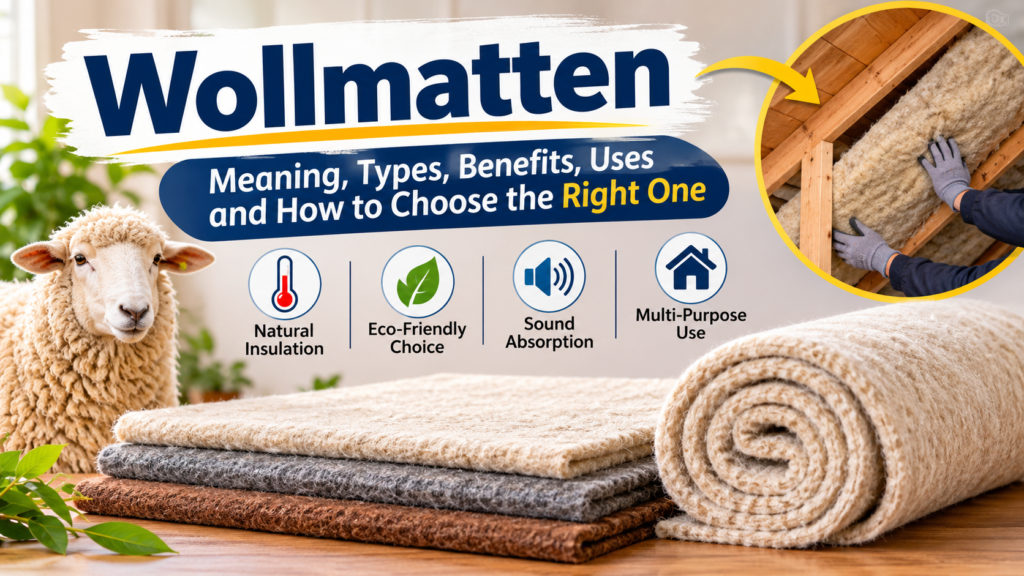
Wollmatten is a German word that translates to “wool mats” in English. These products are made entirely or partly from wool and come in different shapes, thicknesses, and designs. Some are created for home decoration, while others are designed for insulation, furniture protection, and specialist applications.
But there’s more to these products than just their appearance. Let’s explore what Wollmatten are, how they’re made, where they’re used, and what you should consider before choosing one.
What Are Wollmatten?
Wollmatten refers to mats made from natural wool or wool-based blends. Sheep’s wool is commonly used because it has a naturally soft structure and provides useful insulating properties.
The singular German word is “Wollmatte,” while “Wollmatten” is the plural form.
Unlike a particular branded product, Wollmatten is a general term. Different manufacturers produce different varieties depending on their intended purpose.
For example, you might find:
- Decorative wool mats for living rooms and bedrooms.
- Felted wool mats for furniture and other surfaces.
- Wool insulation mats for walls, roofs, and ceilings.
- Protective wool pads for household and industrial applications.
- Special wool mats for crafts and creative projects.
The material composition also varies. Some products contain 100% wool, while others combine wool with polyester, cotton, or additional supporting materials.
How Are Wollmatten Made?
The manufacturing process depends on the type of mat being produced. However, sheep’s wool is one of the most common starting materials.
For insulation products, the wool usually goes through several preparation stages before becoming a finished mat.
First, the raw wool is collected and cleaned to remove dirt and unwanted substances. It may then be washed, degreased, and treated to achieve the required material quality.
After preparation, manufacturers use different techniques to turn the fibres into a suitable structure.
Common manufacturing methods include:
1. Felting: Wool fibres are pressed and bonded together to create a dense material. Felted products are often used for protective pads and floor coverings.
2. Weaving: Wool fibres are interlaced to create a textile surface. This method allows manufacturers to produce different patterns, textures, and thicknesses.
3. Needle punching: Special needles mechanically interlock wool fibres, creating a stable fibrous sheet. This technique is commonly used for insulation materials.
4. Blending: Wool can be combined with other fibres to improve strength, stability, or handling characteristics.
Not every Wollmatte follows the same manufacturing process. That’s why checking the product description is important.
Different Types of Wollmatten
There are several types of wool mats available, and each serves a slightly different purpose.
1. Felted Wollmatten
Felted wool mats are made by bringing wool fibres together into a compact structure. They usually have a firm but slightly soft surface.
They’re useful for:
- Furniture protection.
- Decorative applications.
- Small household projects.
- Craft and DIY activities.
Their thickness and density can vary depending on the manufacturing process.
2. Woven Wollmatten
Woven wool mats are created by interlacing wool fibres. They’re often selected for their attractive appearance and comfortable texture.
You can use them in living rooms, bedrooms, offices, and other indoor spaces.
Some designs have simple colours, while others feature decorative patterns.
3. Wool Insulation Mats
These are specially manufactured products designed to improve thermal and acoustic insulation in buildings.
Sheep’s wool fibres can trap air within their structure, helping reduce heat transfer. Wool insulation mats are available for applications involving roofs, walls, floors, and ceilings.
However, ordinary decorative wool mats shouldn’t be used as building insulation. Always choose products manufactured and approved for the intended construction application.
4. Decorative Wool Mats
If appearance and comfort are your main priorities, decorative Wollmatten may be worth considering.
They can add warmth and texture to a room without requiring major changes to the existing interior.
Main Benefits of Wollmatten
Why do people choose wool-based mats instead of other materials? There are several reasons.
Natural Warmth and Insulation
Wool is known for its insulating properties. Its fibrous structure can hold small pockets of air, helping create a barrier against heat transfer.
This makes wool-based products useful in both household comfort applications and specially designed building insulation systems.
Moisture Management
One interesting property of sheep’s wool is its ability to absorb and release moisture.
According to the 3N Competence Centre, sheep’s wool insulation can absorb and release moisture equivalent to up to 33% of its own weight under the described conditions.
This doesn’t mean wool mats are waterproof. It simply means wool fibres can interact with moisture in the surrounding environment.
Comfortable Surface
Decorative wool mats can make hard flooring feel more comfortable. They’re particularly useful in bedrooms, reading corners, and other spaces where people spend time sitting or standing.
Sound Absorption
Wool-based materials can help absorb sound and reduce unwanted reflections in indoor environments.
Specially designed wool insulation products may therefore provide both thermal and acoustic benefits.
Renewable Material
Sheep’s wool is a renewable natural fibre. It can be an attractive option for people interested in materials made from renewable resources.
However, the environmental impact of a finished product also depends on its processing, chemical treatments, additional fibres, transport, and disposal.
Where Can You Use Wollmatten?
The right application depends on the design and technical specifications of the product.
| Application | How Wollmatten Can Help |
|---|---|
| Living rooms | Add warmth and decorative texture |
| Bedrooms | Provide a comfortable floor surface |
| Offices | Improve comfort and interior appearance |
| Building insulation | Help reduce heat transfer |
| Walls and ceilings | Support thermal and acoustic insulation |
| Furniture | Protect surfaces from scratches |
| DIY projects | Provide a flexible material for crafts |
And that’s one of the interesting things about Wollmatten. The same general material category can serve very different purposes.
Wollmatten vs Synthetic Mats: What’s the Difference?
Wool and synthetic mats have different characteristics. Neither option is automatically better for every situation.
Here’s a simple comparison:
| Feature | Wollmatten | Synthetic Mats |
|---|---|---|
| Main material | Natural wool or wool blends | Man-made fibres |
| Texture | Often soft and fibrous | Depends on the material |
| Insulation | Naturally insulating | Varies by product |
| Moisture behaviour | Can absorb and release moisture | Depends on fibre type |
| Environmental impact | Depends on sourcing and processing | Depends on manufacturing and composition |
| Maintenance | Requires suitable care | Often varies by material |
| Cost | Depends on wool quality and construction | Available across different price ranges |
If you prefer natural fibres, wool mats may be appealing. But synthetic products can sometimes offer easier cleaning, greater moisture resistance, or lower purchase prices.
The best choice depends on what you actually need.
Things to Consider Before Buying Wollmatten
Buying the first wool mat you find online isn’t always a good idea. A little research can help you avoid choosing the wrong product.
Here are some important points to check:
- Material composition: Find out whether the product contains 100% wool or a mixture of different fibres.
- Thickness: Consider how much cushioning or insulation you need.
- Density: A denser mat may be more suitable for certain applications, but density should match the intended purpose.
- Size: Measure the available space before ordering.
- Maintenance: Check whether the product requires professional cleaning or special care.
- Moisture exposure: Make sure the product is suitable for the environment where you plan to use it.
- Safety certification: For building insulation, check relevant fire performance, technical documentation, and local construction requirements.
One more thing: don’t ignore the manufacturer’s installation instructions, especially when purchasing insulation materials.
How to Maintain and Clean Wollmatten
Wool products can last a long time when they’re handled properly. Still, they need suitable maintenance.
For everyday household wool mats, consider these simple practices:
- Vacuum gently to remove loose dust and dirt.
- Clean small stains according to the manufacturer’s instructions.
- Avoid excessive water or harsh cleaning chemicals.
- Allow the mat to dry properly if it becomes damp.
- Store unused mats in a clean, dry place.
- Protect wool products from prolonged moisture and unsuitable storage conditions.
If you’re dealing with insulation mats, follow the manufacturer’s maintenance and installation guidance instead of treating them like ordinary floor coverings.
Are Wollmatten Worth Considering?
For people who appreciate natural materials, Wollmatten can be a practical option. They offer warmth, texture, and useful material properties across several applications.
They’re particularly interesting when you want a natural-fibre floor covering or are exploring alternative insulation materials for a building project.
However, expectations should remain realistic. Wool mats aren’t automatically waterproof, completely maintenance-free, or suitable for every environment.
The product’s quality, composition, and intended use matter much more than its name.
Frequently Asked Questions (FAQs)
1. What does Wollmatten mean?
Wollmatten is a German word that means wool mats. It refers to different types of mats made fully or partly from wool.
2. Are Wollmatten made from real sheep’s wool?
Many Wollmatten products use sheep’s wool as their primary material. However, some manufacturers combine wool with synthetic fibres or other materials.
3. Are Wollmatten suitable for home use?
Yes. Decorative wool mats can be used in bedrooms, living rooms, offices, and other indoor spaces. The appropriate design depends on the intended application.
4. Can Wollmatten be used for insulation?
Yes, but only specially manufactured insulation mats should be used for building applications. Check their technical specifications before installation.
5. Are Wollmatten waterproof?
No. Wool can absorb and release moisture, but this doesn’t make wool mats waterproof. Prolonged exposure to water may damage certain products.
6. Are Wollmatten environmentally friendly?
They can be an environmentally considerate option because wool is a renewable natural fibre. However, the overall impact depends on how the wool is sourced, processed, treated, and disposed of.
7. How long do Wollmatten last?
Their lifespan depends on material quality, construction, usage, maintenance, and environmental conditions. A well-maintained wool mat can remain useful for many years.
Final Thoughts
Wollmatten are more than simple wool coverings. They’re a broad category of products that combine the natural characteristics of wool with different practical applications.
Whether you’re interested in comfortable home decoration, furniture protection, creative projects, or natural building insulation, there’s a type of wool mat designed for a particular purpose.
The important thing is to understand what you’re buying. Check the material, construction, thickness, and care requirements before making a decision.
With the right product, Wollmatten can be a useful addition to both modern homes and practical building projects.