 By Admin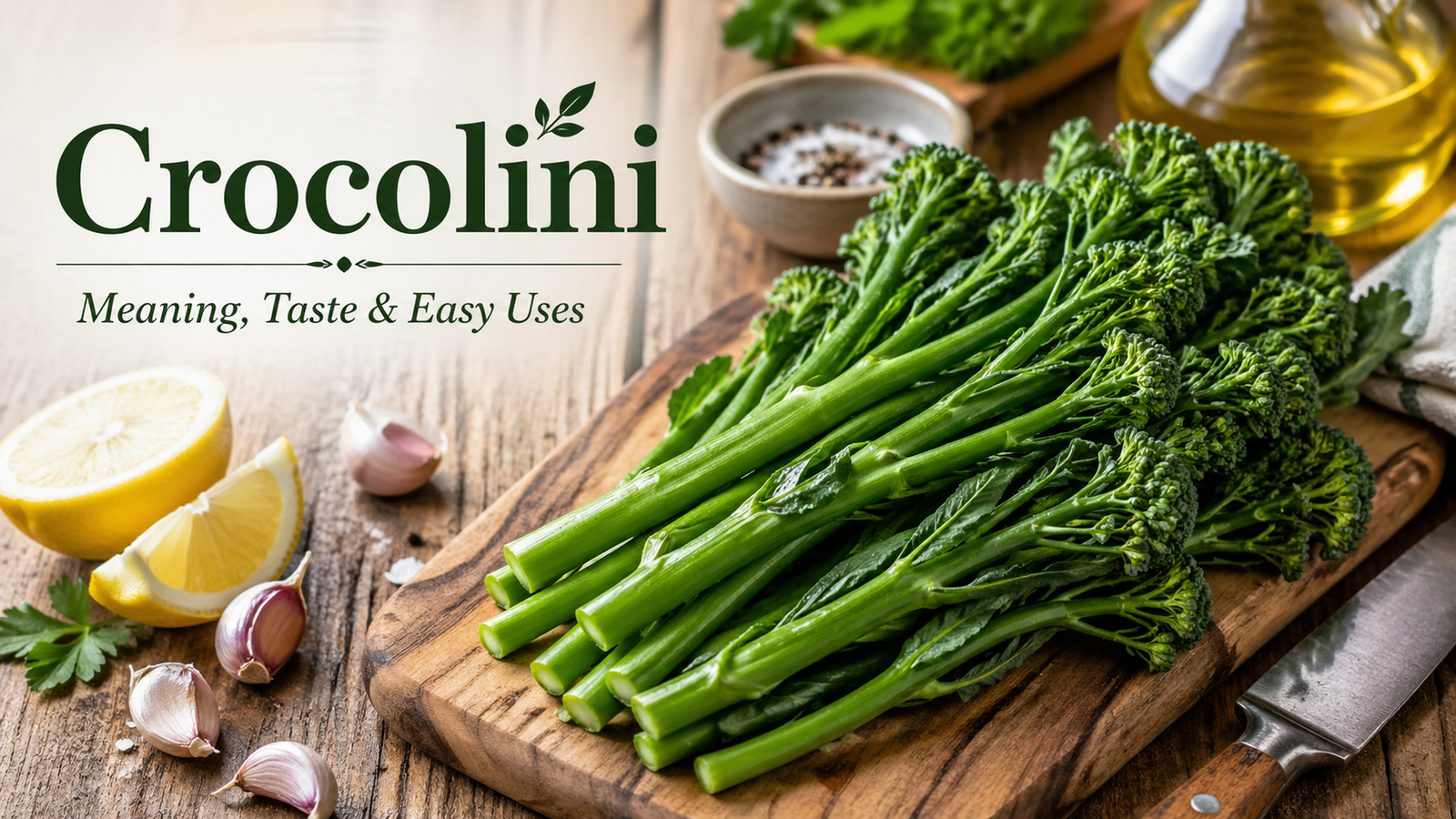
Crocolini is one of those words that sounds familiar, but also a little new. You may look at it and think, “Is this broccoli? Is it broccolini? Or something else?” Fair question.
In simple words, crocolini is commonly described online as a tender green vegetable similar to broccolini, with slim stems, small florets, and a mild, slightly sweet flavor. Some sources use the word as a fresh name for a broccoli-style vegetable, while others treat it as very close to broccolini. Broccolini itself is known as a hybrid of broccoli and Chinese broccoli, also called gai lan.
And honestly, that’s where the confusion starts.
Crocolini is not as widely known as broccoli. You probably won’t see it in every grocery store. But the idea behind it is easy to understand: a softer, slimmer, quicker-cooking green that works well in everyday meals.
What Is Crocolini?
Crocolini is usually used to describe a green vegetable with long, thin stems and small broccoli-like tops. It looks more delicate than regular broccoli. Less chunky. More “restaurant side dish” style.
It is often compared with:
- Broccoli
- Broccolini
- Tenderstem broccoli
- Baby broccoli
- Chinese broccoli
Broccolini, the vegetable most often linked with crocolini, is a cross between broccoli and Chinese broccoli. It has smaller florets and longer stems than regular broccoli. The name “Broccolini” is also a registered trademark in the United States, which is why you may see similar vegetables sold under different names.
So, if you see “crocolini” in a recipe or article, think of it as a tender broccoli-style green. That’s the safest way to understand it.
What Does Crocolini Taste Like?
Crocolini has a mild green taste. Not too bitter. Not too strong.
Regular broccoli can sometimes taste earthy or slightly sharp, especially if overcooked. Crocolini is usually softer in flavor. A little sweet. A little grassy. And the stems are often the best part because they stay tender when cooked right.
The taste works well with simple ingredients like:
- Olive oil
- Garlic
- Lemon juice
- Butter
- Black pepper
- Chili flakes
- Parmesan cheese
- Soy sauce
- Sesame oil
But don’t overdo it. Crocolini doesn’t need heavy sauces. A hot pan, a little oil, salt, and lemon can be enough.
Crocolini vs Broccoli vs Broccolini
Here’s a simple table to make the difference clear.
| Feature | Crocolini | Broccoli | Broccolini |
|---|---|---|---|
| Look | Thin stems, small florets | Thick stalk, large head | Long stems, small florets |
| Taste | Mild, slightly sweet | Earthy, stronger | Sweet, mild, tender |
| Cooking time | Quick | Medium | Quick |
| Best use | Sauté, roast, grill, stir-fry | Steam, roast, soup, curry | Sauté, grill, pasta, stir-fry |
| Texture | Tender-crisp | Firm and chunky | Tender-crisp |
| Common confusion | Often linked with broccolini | Very common vegetable | Sometimes called baby broccoli |
Is Crocolini Healthy?
Yes, crocolini can be a healthy food choice, especially if it is similar to broccoli or broccolini. These vegetables belong to the cruciferous vegetable family, which also includes cabbage, kale, Brussels sprouts, and cauliflower.
Broccoli is known for fiber, vitamin C, vitamin K, minerals, and plant compounds. Health sources also note that broccoli contains antioxidants and nutrients that support general wellness.
Crocolini may offer similar benefits when eaten as part of a balanced diet.
Possible benefits include:
- Helps add fiber to meals
- Supports a lighter, vegetable-rich diet
- Adds vitamin C and other nutrients
- Works well for low-calorie meals
- Makes healthy eating feel less boring
- Cooks fast, so it’s easy for busy people
And yes, it’s much better when you don’t boil it until it turns sad and mushy. That happens too often with green vegetables.
How to Cook Crocolini
Crocolini cooks fast. That’s one of its best qualities. If you cook it too long, the stems lose their bite and the florets can become dull.
Try these easy methods.
1. Sautéed Crocolini
This is probably the easiest method.
Wash the crocolini, trim the dry ends, and heat olive oil in a pan. Add garlic for a few seconds, then add the greens. Cook for 4 to 6 minutes until tender-crisp.
Add lemon juice at the end. Not before. Fresh lemon at the end tastes brighter.
2. Roasted Crocolini
Roasting gives crocolini crispy tips and a deeper flavor.
Spread it on a baking tray. Add olive oil, salt, black pepper, and a little garlic powder. Roast at 400°F for around 10 to 15 minutes.
The edges should look slightly charred — not burned, just a little crisp.
3. Grilled Crocolini
Grilled crocolini tastes amazing with smoky food like chicken, steak, or fish.
Brush it with oil. Grill for a few minutes on each side. Add salt, lemon, and chili flakes.
Simple. Really good.
4. Stir-Fried Crocolini
For an Asian-style meal, stir-fry crocolini with sesame oil, garlic, soy sauce, and a small touch of honey.
It goes well with rice, noodles, tofu, chicken, or shrimp.
Easy Crocolini Recipe
Here’s a quick recipe you can make in less than 15 minutes.
Garlic Lemon Crocolini
Ingredients:
- 1 bunch crocolini
- 1 tablespoon olive oil
- 2 garlic cloves, sliced
- 1 tablespoon lemon juice
- Salt to taste
- Black pepper to taste
- Optional: chili flakes or parmesan
Steps:
- Wash the crocolini and trim the ends.
- Heat olive oil in a pan.
- Add garlic and cook for 20 to 30 seconds.
- Add crocolini and toss well.
- Cook for 4 to 6 minutes.
- Add salt, pepper, and lemon juice.
- Serve warm.
And that’s it. No fancy method needed.
Best Ways to Use Crocolini in Meals
Crocolini is a good side dish, but it can also become part of the main meal.
You can use it in:
- Pasta with garlic and olive oil
- Rice bowls
- Stir-fried noodles
- Vegetable salads
- Omelets
- Wraps
- Grilled chicken plates
- Salmon dinners
- Soup toppings
- Roasted vegetable trays
It also looks nice on the plate. That matters, honestly. Food feels better when it looks fresh and colorful.
Buying and Storing Crocolini
If you find crocolini or a similar tender broccoli-style vegetable in the store, check the stems first. They should look firm, green, and fresh.
Avoid bunches that have:
- Yellow florets
- Slimy stems
- Dry ends
- Strong smell
- Soft or floppy texture
To store it, wrap it loosely in a paper towel and keep it in a bag or container in the fridge. Use it within a few days for the best taste.
Common Mistakes When Cooking Crocolini
Crocolini is easy, but small mistakes can ruin the texture.
Avoid these:
- Cooking it too long
- Using too much water
- Adding lemon too early
- Crowding the pan
- Forgetting to trim the dry ends
- Covering it for too long while cooking
The goal is tender-crisp. Still green. Still fresh.
Is Crocolini the Same as Broccolini?
Not always. In many online uses, crocolini seems to be treated like a broccoli-style vegetable very close to broccolini. But broccolini is a more established term, and it refers to a known broccoli and Chinese broccoli hybrid.
So, the simple answer is this: crocolini is best understood as a tender, slim-stem green similar to broccolini, but the word itself is less standardized.
Final Thoughts
Crocolini may sound new, but the idea is simple. It’s a tender green vegetable that fits into modern home cooking. Quick to prepare. Easy to season. Healthy enough for daily meals.
And maybe that’s why people are searching for it.
You don’t need to be a chef to use crocolini. Just cook it lightly, keep the flavor fresh, and don’t bury it under heavy sauces. A little garlic, lemon, salt, and heat — that’s usually enough.
Sometimes the simplest vegetables are the ones we end up using the most.