 By Admin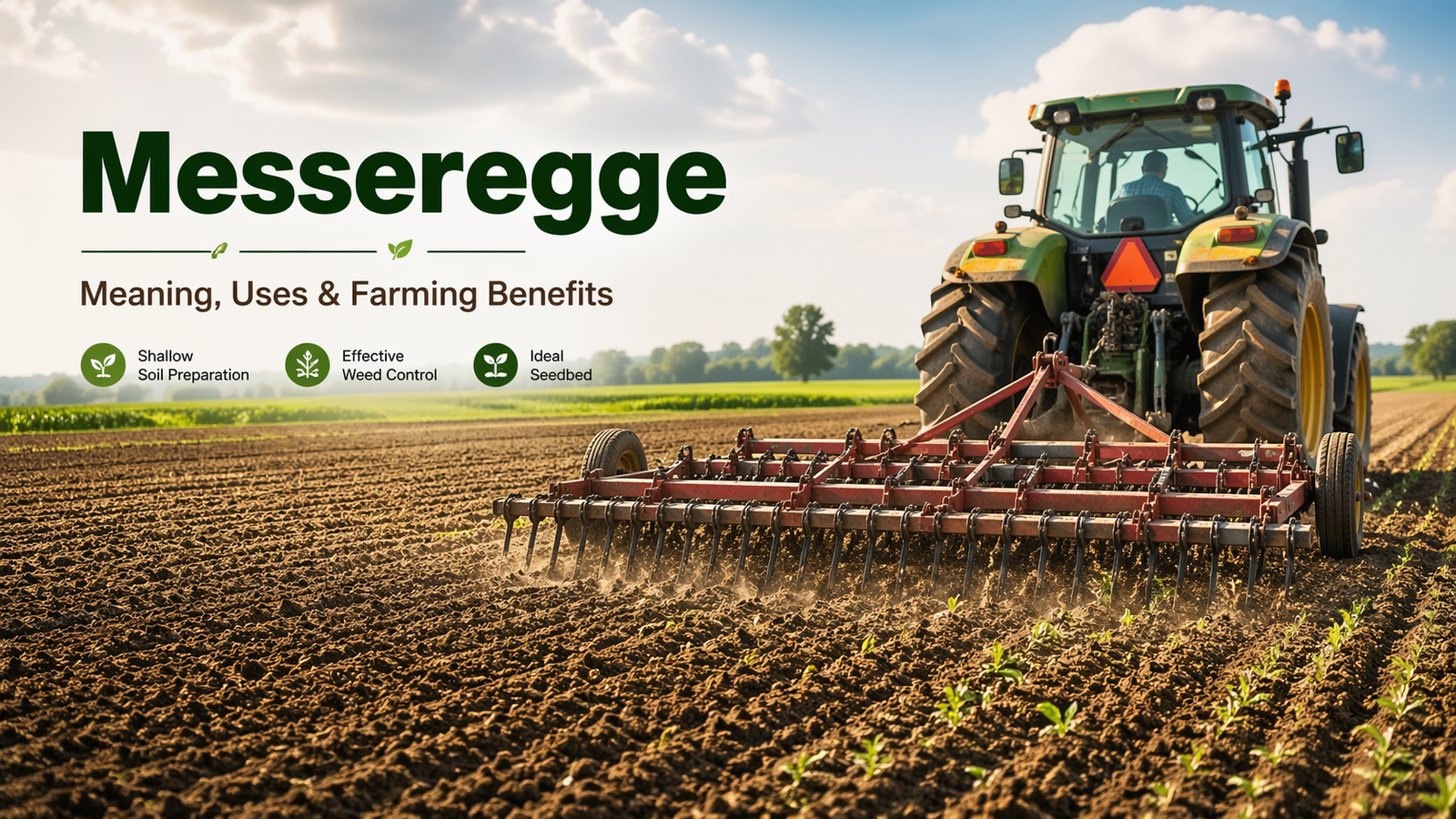
Messeregge is not a word most people hear every day. It sounds technical, a little German, and maybe even confusing at first. But once you break it down, it becomes easier: “Messer” means knife, and “Egge” means harrow, a farm tool used for shallow soil loosening, crumbling, and weed control.
So, in simple words, messeregge can be understood as a knife harrow or a blade-based agricultural tool used for light soil work, weed control, and seedbed preparation. Some translation sources also connect “Messeregge” with “scarifier” in agriculture and engineering.
What Is a Messeregge?
A messeregge is a farming implement designed to work near the soil surface. It does not usually dig as deeply as a plough. Instead, it cuts, loosens, levels, and breaks the upper layer of the ground.
Think of it like this: a plough turns the soil over. A messeregge works more gently. It touches the top layer, slices through small weeds, breaks crusted soil, and helps prepare a cleaner seedbed.
And yes, that small difference matters.
Farmers use harrow-type tools to loosen the upper soil layer, crush clods, support seedbed preparation, and manage weeds. A messeregge follows the same basic idea, but with a stronger “knife” or cutting concept behind it.
Why the Name “Messeregge” Makes Sense
The word comes from German parts:
| Word Part | Meaning | Simple Explanation |
|---|---|---|
| Messer | Knife | A cutting blade or sharp edge |
| Egge | Harrow | A tool used to loosen and crumble soil |
| Messeregge | Knife harrow | A blade-style harrow for surface soil work |
This name is practical. Farmers don’t always need fancy names. They need tools that tell them what they do. A messeregge cuts and harrows. Simple.
How a Messeregge Works
A messeregge is usually pulled by a tractor or attached as part of a larger tillage system. As it moves across the field, its blade-like parts pass through the surface.
It can help with:
- Cutting small weeds before they grow stronger
- Breaking light soil crust after rain
- Spreading crop residue more evenly
- Loosening the topsoil without deep soil turning
- Preparing the field before sowing
- Improving contact between seed and soil
Some modern tillage systems also use tools like straw harrows and knife rollers to crush and distribute crop residue, which can support faster decomposition and reduce disease pressure for the next crop.
That’s where a messeregge becomes useful. Not always as a heavy machine. Sometimes as a smart, shallow-working tool.
Main Uses of Messeregge in Farming
The messeregge has several practical uses. It is not just one of those tools that looks good in a machinery catalog. It has real field value.
1. Seedbed Preparation
Before planting, the soil should be fine, level, and not too compact. A messeregge can help create that soft top layer where seeds settle better.
A good seedbed means:
- Better germination
- More even crop growth
- Easier planting
- Less seed waste
- Better early root development
Not perfect soil, of course. Farming is never that neat. But better.
2. Weed Control
One of the biggest benefits of a messeregge is shallow weed control. It can disturb young weeds before they become a bigger problem.
Mechanical harrowing is widely used for weed control, and modern harrows are often designed with adjustable tine pressure and working depth so farmers can respond to soil and crop conditions.
A messeregge can be helpful when weeds are still small. If weeds are already tall and deeply rooted, the tool may not be enough on its own.
3. Residue Management
After harvesting, fields often have straw, stalks, and plant leftovers. If residue sits unevenly, it can affect the next crop.
A messeregge can help chop, move, and spread light residue across the field. Straw harrows are also used for initial crop residue management after harvest because their aggressive tines spread residues more evenly on the soil surface.
And that’s important. Uneven residue can create wet spots, cold soil patches, and poor seed placement.
4. Soil Crust Breaking
After rain, some soils form a hard crust on top. This crust can stop air, water, and seedlings from moving properly.
A messeregge can lightly break that crust without turning the whole field upside down.
This is especially useful in:
- Fine-textured soils
- Recently planted fields
- Fields after heavy rain
- Areas where seedlings struggle to emerge
Messeregge vs Regular Harrow
A regular harrow may use tines, discs, chains, or spikes. A messeregge focuses more on cutting action.
| Feature | Messeregge | Regular Harrow |
|---|---|---|
| Main action | Cutting and shallow loosening | Loosening, leveling, crumbling |
| Soil depth | Usually shallow | Shallow to medium |
| Weed control | Good for young weeds | Depends on type |
| Residue handling | Good with light residue | Depends on design |
| Best use | Seedbed, crust, weeds, residue | General soil preparation |
The difference is not always huge. In real farming, tools overlap. One farmer may call it a knife harrow. Another may call it a scarifier-style harrow. The purpose matters more than the label.
Benefits of Using a Messeregge
A messeregge can be useful because it does a lot without being too aggressive.
Key benefits include:
- It saves time during light field preparation
- It can reduce the need for deeper tillage
- It helps manage weeds mechanically
- It supports better seedbed quality
- It can improve residue distribution
- It may reduce soil disturbance compared to ploughing
- It is useful in conservation-style farming systems
But it’s not magic. No tool is.
The results depend on soil moisture, field condition, crop type, speed, blade angle, tractor setup, and timing. Timing especially. Use it too late, and weeds may survive. Use it when soil is too wet, and you may create smearing or clumps.
Common Mistakes When Using a Messeregge
Some farmers expect too much from one pass. That’s a common mistake.
A messeregge works best when used at the right stage. For example, small weeds are easier to control than older weeds. Light residue is easier to spread than thick, heavy stalks.
Avoid these mistakes:
- Using it in very wet soil
- Running too deep when only surface work is needed
- Using high speed without checking soil finish
- Expecting it to replace every tillage tool
- Ignoring blade wear
- Working fields with heavy residue without proper setup
And yes, worn blades matter. A dull blade drags more than it cuts.
Where Messeregge Fits in Modern Agriculture
Modern farming is moving toward smarter soil management. Many farmers want to reduce deep tillage, save fuel, protect soil structure, and control weeds with fewer chemicals where possible.
That is why tools like harrows, scarifiers, knife rollers, and residue managers are becoming more relevant. They help farmers work the soil carefully instead of disturbing everything deeply.
A messeregge fits nicely into this idea. It is not the biggest tool on the farm. But it can be one of the most practical.
Is Messeregge the Right Tool for Every Farm?
No, not every farm needs it.
A messeregge is better for farms that deal with:
- Surface weeds
- Light to medium soil crust
- Seedbed finishing
- Residue spreading
- Shallow soil preparation
- Reduced tillage practices
It may not be the best choice for very compacted soil, deep-rooted weeds, or heavy post-harvest residue. In those cases, farmers may need deeper cultivation, disc harrows, ploughs, or other equipment.
Final Thoughts
Messeregge may sound like a strange word at first, but the idea behind it is simple. It is a knife-style harrow used for shallow soil work, weed control, residue management, and seedbed preparation.
It cuts. It loosens. It levels a bit. And it does all this without going too deep.
For farmers who want cleaner fields, better seedbeds, and more controlled soil disturbance, a messeregge can be a useful tool. Not perfect for every situation — but useful, practical, and worth understanding.