 By Admin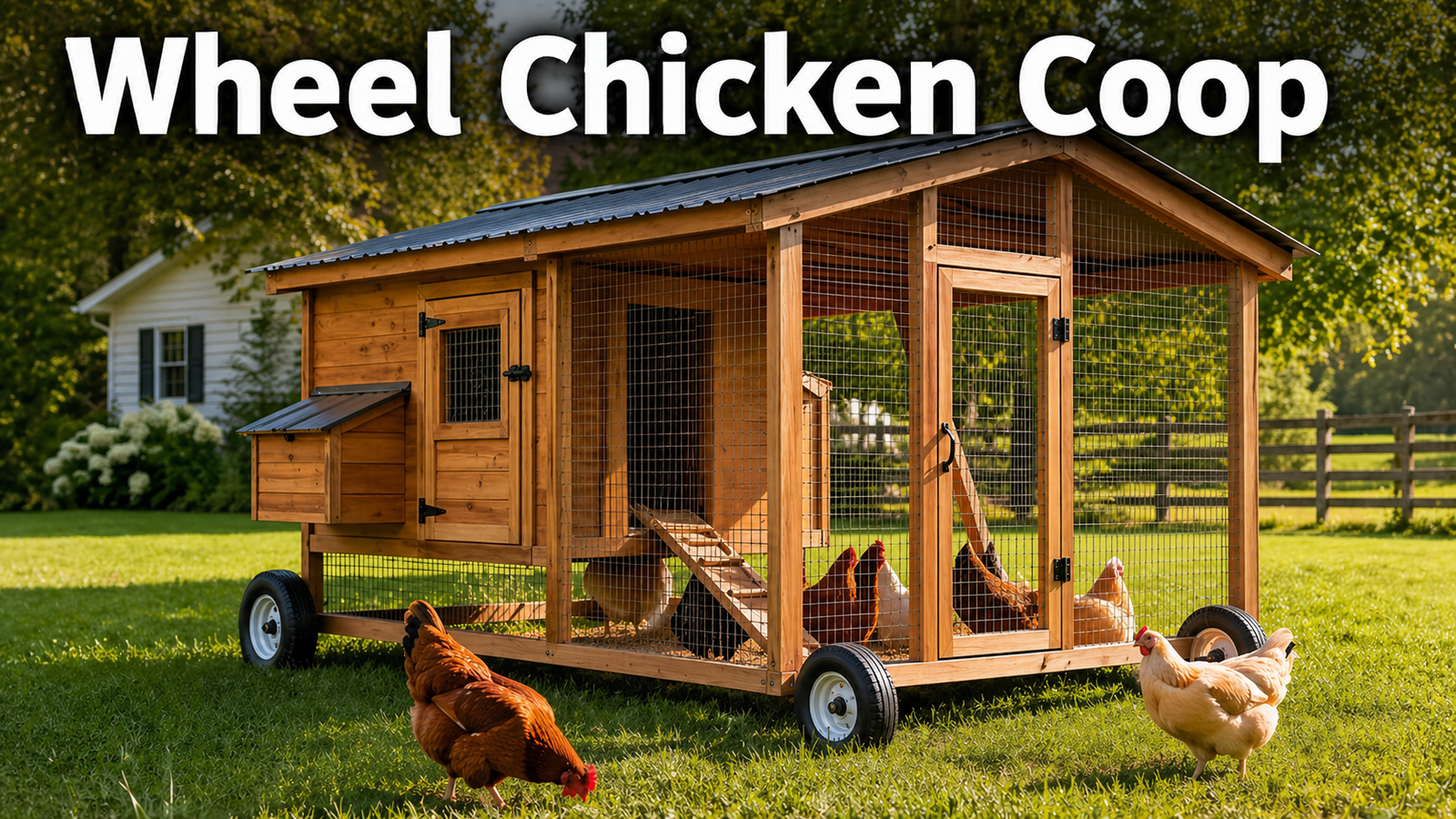
If you’ve ever struggled with cleaning a chicken coop… or watched your yard turn into a muddy mess—yeah, you’re not alone. That’s exactly where a wheel chicken coop comes in.
It’s not some complicated farming tool. It’s actually a very smart, simple idea… a chicken coop you can move around easily. And honestly, once people try it—they rarely go back.
What Is a Wheel Chicken Coop?
A wheel chicken coop (also called a mobile chicken coop or chicken tractor) is a lightweight coop with wheels attached so you can move it across your yard or field.
It usually sits directly on the ground, without a fixed floor, so chickens can scratch, eat bugs, and enjoy fresh grass daily.
Key idea:
You move the coop… not the chickens.
How a Wheel Chicken Coop Works
It’s pretty simple—but also clever.
You place the coop on grass → chickens live inside → after a day or two → you move it to a new spot.
That’s it.
What happens when you move it:
- Chickens get fresh grass and insects
- Old ground recovers naturally
- Waste spreads instead of piling up
And slowly, your whole yard improves.
Why Wheel Chicken Coops Are So Popular
Short answer… less work and healthier chickens.
Long answer—there are several real benefits backed by practical use.
1. Healthier Chickens
Moving the coop gives birds access to fresh forage regularly.
- More natural diet (bugs, grass)
- Less disease and parasites
- Better egg quality
2. Cleaner Yard (No Mud Zones)
Fixed coops destroy one area over time.
But mobile coops prevent that.
- No manure buildup
- Grass stays green
- Soil recovers naturally
3. Natural Fertilizer
Chicken waste is actually great for soil… just not in one spot.
With a wheeled coop:
- Waste spreads evenly
- Lawn becomes richer
- No need for chemical fertilizers
4. Less Cleaning Work
This is the part most beginners love.
- No deep cleaning every week
- No heavy buildup inside coop
- Just basic maintenance
Because… the ground cleans itself.
5. Built-In Pest Control
Chickens eat insects, worms, and even small pests.
So when you move them:
- They clean your land naturally
- Reduce bugs and weeds
- Help prepare soil for gardening
Types of Wheel Chicken Coops
Not all designs are the same. Some are super simple… others look like mini houses on wheels.
Common types:
- A-frame coop (triangle shape)
- Rectangular tractor coop
- Hoop-style coop
- Coop with attached run area
Each has its own use depending on your space and flock size.
Wheel Chicken Coop vs Fixed Coop
Here’s a quick comparison to make things clear:
| Feature | Wheel Chicken Coop | Fixed Coop |
|---|---|---|
| Mobility | Easy to move | Permanent |
| Cleaning | Low effort | High effort |
| Grass condition | Always fresh | Often damaged |
| Chicken health | Better (fresh forage) | Limited |
| Setup cost | Medium | Medium–High |
| Maintenance | Simple | Regular heavy cleaning |
Key Features to Look For
If you’re planning to buy or build one… don’t just pick any design.
Focus on these:
Must-have features:
- Strong wheels (all-terrain preferred)
- Lightweight frame
- Predator-proof mesh
- Weather-resistant roof
- Easy handle for movement
- Proper ventilation
A weak design will frustrate you quickly… especially when moving it daily.
Step-by-Step: How to Use It Properly
You don’t need experience. Just follow a simple routine.
Step 1: Choose the right spot
Place the coop on grass or soil—not concrete.
Step 2: Add chickens
Make sure there’s enough space (about 2–4 sq ft per chicken).
Step 3: Move regularly
- Every 1–2 days for small coops
- Weekly for larger setups
Step 4: Monitor food and water
Even though they forage… they still need proper feed.
Step 5: Check safety
Look for gaps or weak spots in fencing.
Real-Life Example
Let’s say you have 6 chickens in your backyard.
If you keep them in one fixed coop:
- Area becomes dirty
- Smell increases
- Grass dies
But with a wheel chicken coop:
- Today → backyard left side
- Tomorrow → middle
- Next day → right side
After a few weeks… your lawn actually looks better than before.
Common Mistakes to Avoid
Even though it’s simple, people still mess it up.
Avoid these:
- Not moving the coop often enough
- Choosing heavy designs (hard to move)
- Ignoring predator protection
- Overcrowding chickens
- Poor wheel quality
Small mistakes… big problems later.
Is a Wheel Chicken Coop Right for You?
It depends on your setup.
Good for:
- Small backyard farmers
- Beginners
- Organic farming lovers
- People who want low maintenance
Not ideal for:
- Very large commercial farms
- People who can’t move coop regularly
Future of Mobile Chicken Farming
This idea is growing fast… and not just in small farms.
Some modern coops now include:
- Solar panels
- Automatic feeders
- Smart monitoring systems
And yeah… it’s getting more advanced every year.
FAQs
What is a wheel chicken coop used for?
It’s used to move chickens easily to fresh ground while keeping them safe and contained.
How often should I move it?
Every 1–2 days is ideal for small coops.
Is it better than a fixed coop?
For small setups—yes. It reduces cleaning and improves chicken health.
Do chickens like mobile coops?
Yes, they enjoy fresh grass, bugs, and space to move.
Final Thoughts
A wheel chicken coop isn’t just a “nice upgrade”… it changes how you manage chickens.
Less cleaning. Healthier birds. Better land.
And honestly—it just makes life easier.
If you’re starting out or even upgrading your setup… this is one of the smartest moves you can make.